Crossing the endless hall
Computer game as design tool for future tenets to illustrate their community.
2023 /UPenn, Philadelphia. Teammate Tingdong Xiong, Andy Yan
Overview
Setting the Scene
Prepare to embark on a journey where perception blurs, and boundaries dissolve. The humble laundry room becomes the threshold to an endless world of discovery, where the journey begins, and the paintings await your touch, eager to transport you to places beyond imagination. Welcome to a VR experience that blurs the boundaries of the ordinary and invites you to step into the extraordinary.
Storyline
Alex, a student at UPenn, sought a break from assignments and exams one ordinary night by doing laundry. As the machines hummed, an unexpected event occurred. The room shimmered, and Alex was transported to UPenn’s common hall, leaving the laundry room behind. Paintings adorned the walls, each seeming to hold a mysterious power.
In this surreal realm, Alex realized they were in a perplexing loop of endless landscapes and strange places. Every step and every touch of a painting led to more bewildering discoveries.
The task at hand was clear: find an exit from this enigmatic maze.
Gameplay Mechanics
- Exploration: Players will navigate through different environments in the endless loop hinted at by the paintings.
- Interaction with Paintings: Players are able to interact with the paintings, by reaching out and touching them in the VR environment. Each painting is a portal to a different location, triggering a transition to a new area.
- Hint System: Players receive hints through subtle cues in the environment, such as the appearance of certain objects or audio and visual cues.
Objective or Goal
The goal of the game is for the player to navigate through the different environments, solve puzzles, and interact with paintings and objects in order to ultimately find their way to escape from the endless loop. This objective drives the player’s exploration and puzzle-solving efforts throughout the game.
Main building
This is the main portal, framed with many paintings that could trigger the transition to a new area.
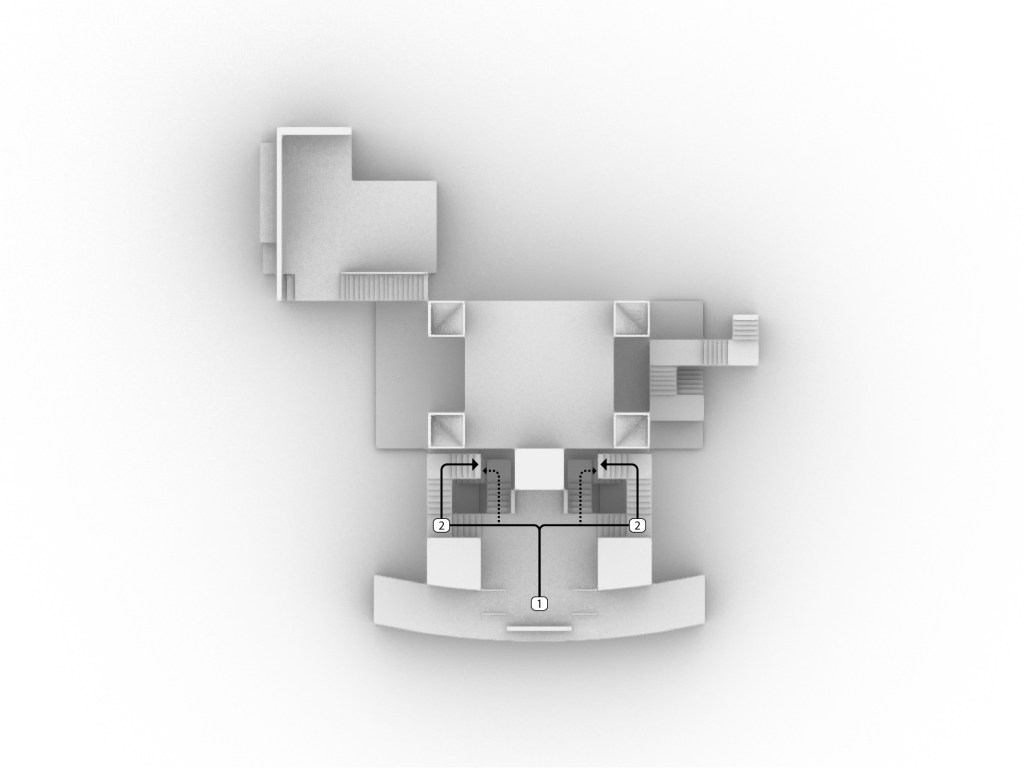
First floor, the starting point transferred from the laundry room.
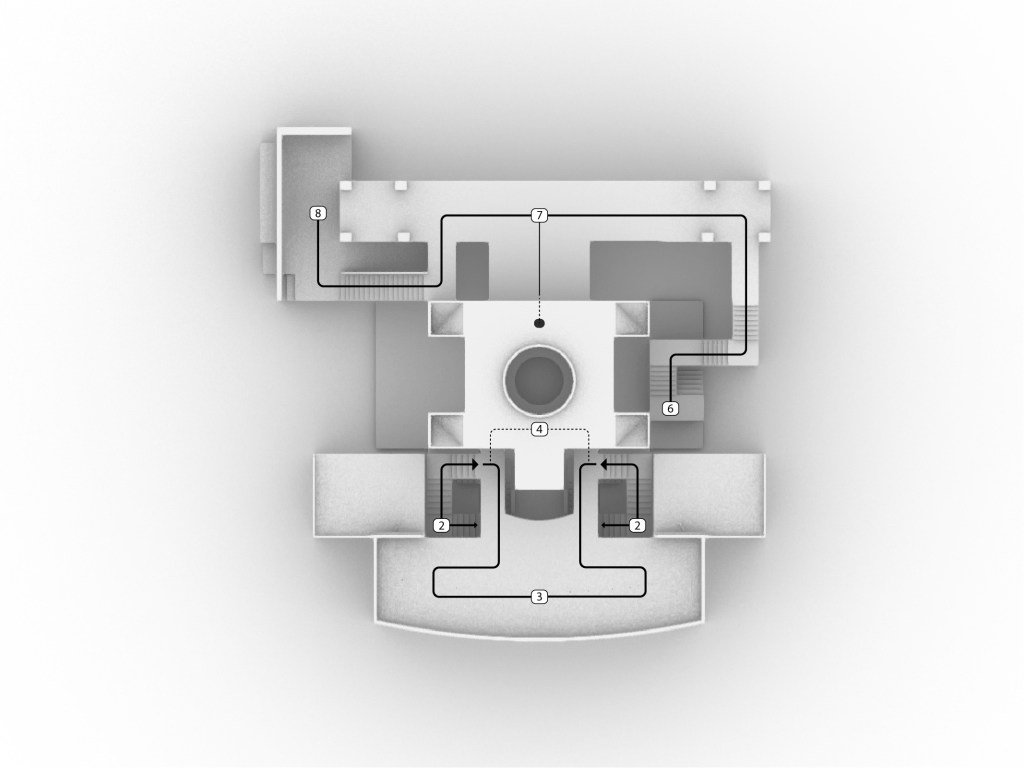
Second floor, decorated with many paintings and weird vegetables.
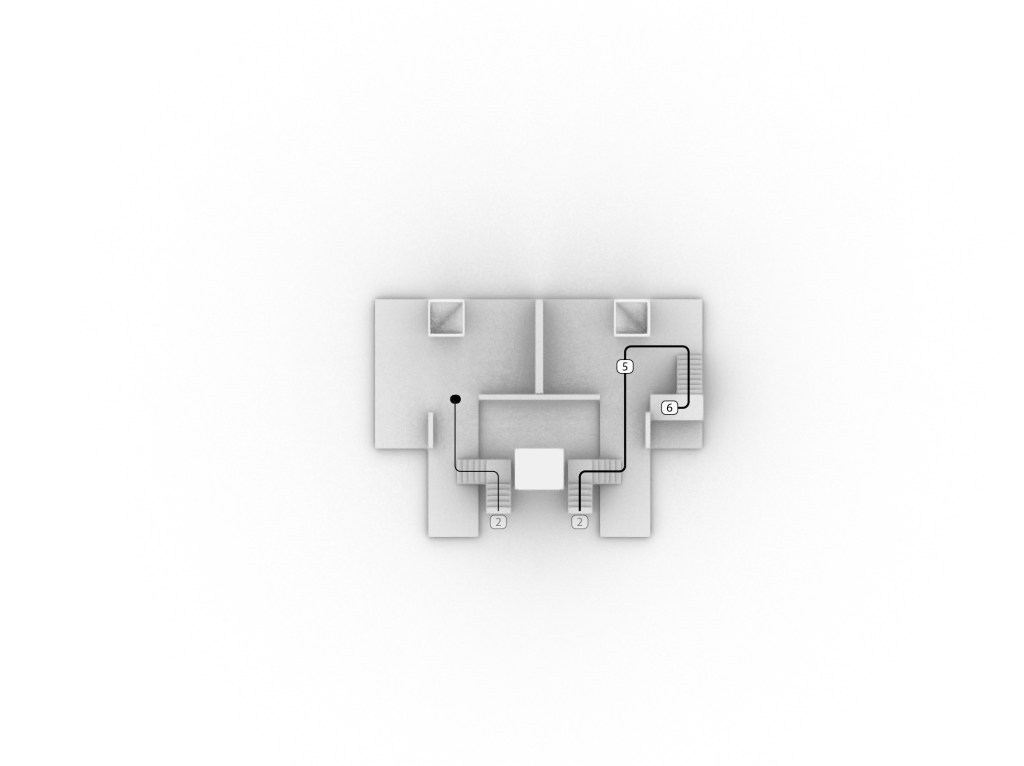
Basement, an empty grocery store, a few strange vegetable sculpture.
Interactions
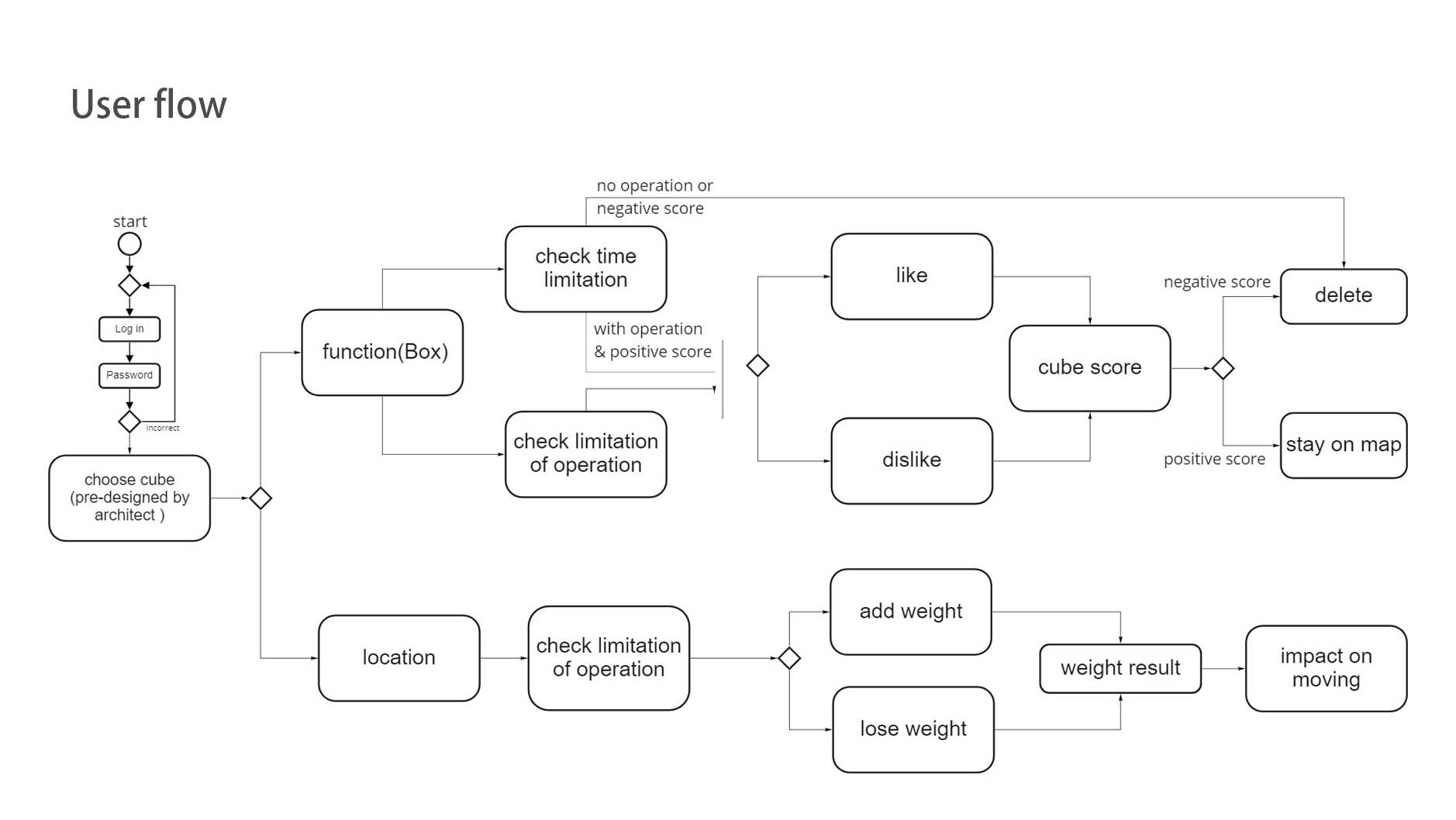
Selecting desired facility
A library of lists most common facilities under different categories. The facilities are simplified as boxes or surfaces. Each one
contains several basic information such as area, cost, capacity etc. to help users make decision.

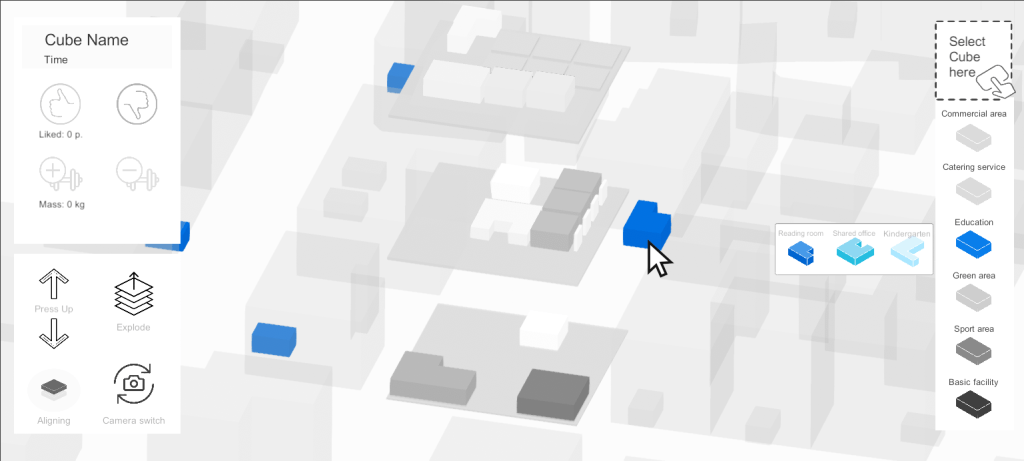
Dragging facility to desired place
By dragging a facility, the related facilities near the neighborhood will show up to provide necessary information for users to make reasonable master planning.
Voting and communicating
Through the interaction panel, users could interact with the facility selected by themself or other users, to vote for it or deciding its location.

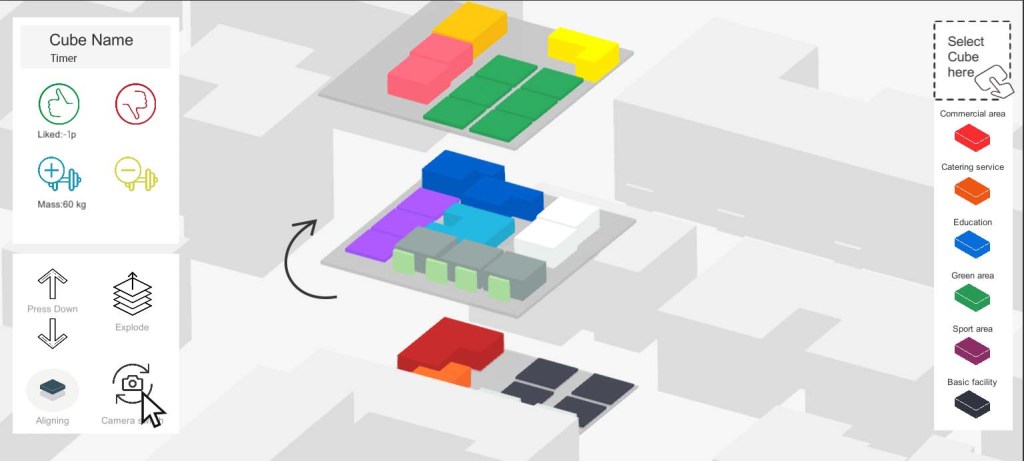
Reviewing
The view control panel provides an “explode” mode for the model or the option to rotate the camera. This aids users in examining the facility and its placement within the entire building.
Outcome
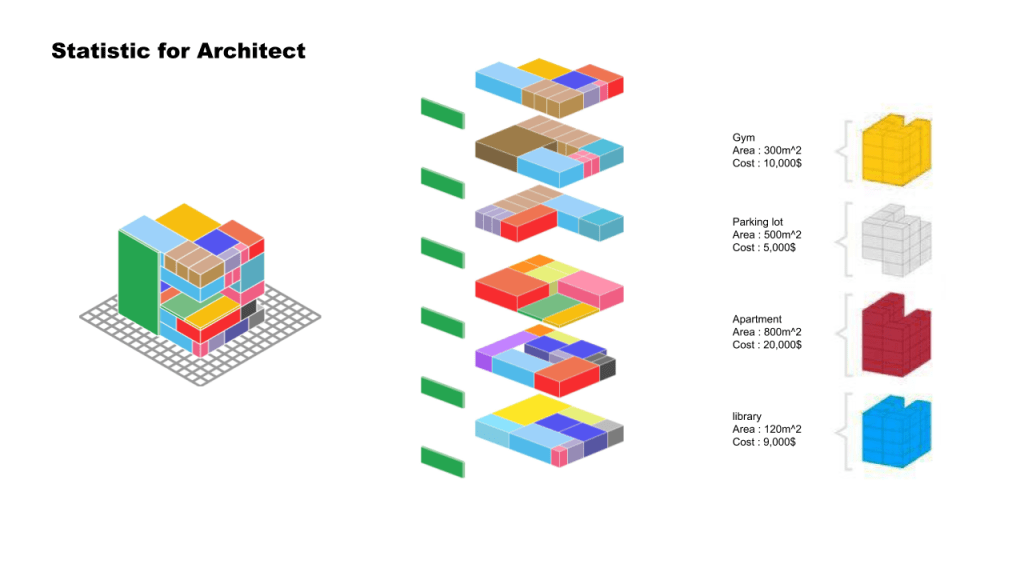
At the end of the box-dragging game, we would have an architectural diagram, which will show some unique needs of community residents, and their relative positions hoping to be placed.
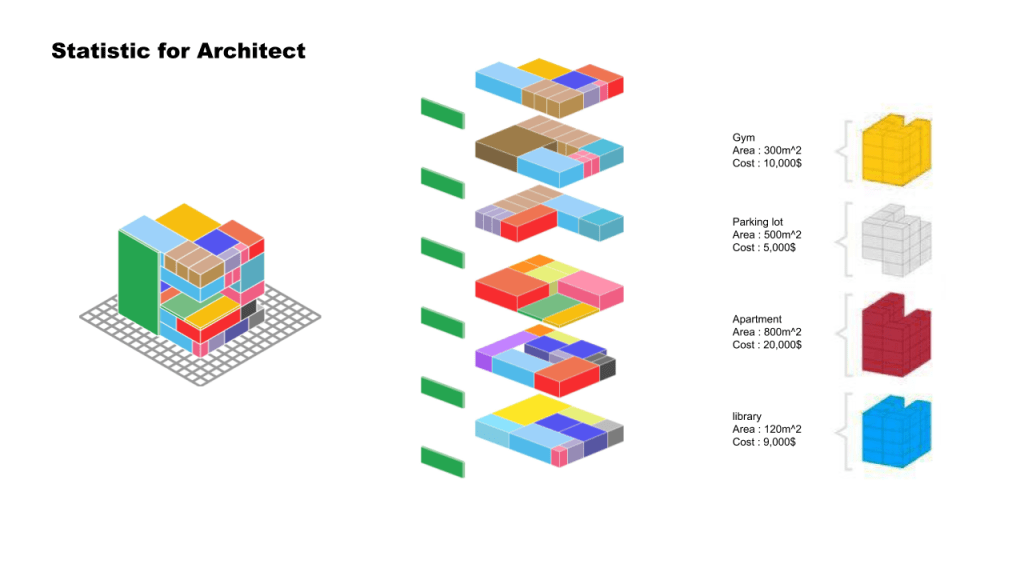
Research
In order to understand the users’ needs and the challenges of the participatory design process,
I have researched the existing project in Germany about how they conducted the protocol and what kind of method they used to collect data.
1. Case Study: PlanBude
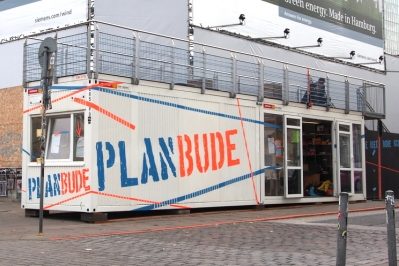
Our first reference is the project “ESSO Häuser” organized by PlanBude in Hamburg. It shows us a successful organization in co-designing street blocks and a high level of participation with many fun citizens in the participatory project.
- The Team
The PlanBude is an interdisciplinary team from the fields of urban planning, architecture, art, urbanism, social district work and cultural studies and stands for a participation process conceived from the district. It is a collective wish production carried out by neighbors and experts.
- The concept as negotiation platform
PlanBude shows a constructive way out of the conflict-laden situation between the district and the investor and forms the basis for negotiations with the district management.
(Source: St. Pauli selbermachen 2014)

Methodology
PlanBude employed a highly accessible and inclusive participatory design process, utilizing artistic and planning resources as the foundation for an urban development competition for the new construction of the Esso houses. This approach represents a distinct departure in planning methods for the ESSO-Häuser, emphasizing accessibility, model-like representation, democratic principles, open-endedness, inclusivity, and on-site coordination. The project seamlessly weaves together urban planning, architecture, visual arts, urbanism, neighborhood cultural work, social work, and sociology with the tangible realities of the street, the inhabited city, and local knowledge.
- Place for voice:
Installed a container ensemble at Spielbudenplatz, visually marked and staffed by team members in PlanBude attire. This creates a prominent and inviting landmark on-site, open seven days a week to provide a high-quality space even during the construction phase.
- Information for response:
Exhibitions showcasing interim results and a small urban library attract both the curious and reserved. Visitors can gather information and find inspiration in documents, planning materials, and a wish archive.
- Material for expression:
- Drawing materials, clay, cameras.
- Structured questionnaires
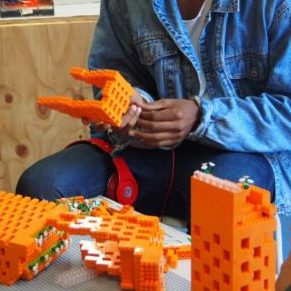
- A scale model at 1:50 scale equipped with 3-D models from St.Pauli residents

Challenges
- Managing Diverse Perspectives:
Incorporating the input of various stakeholders with different backgrounds, experiences, and opinions can be complex and may require skilled facilitation.
- Time-Consuming Process:
Engaging stakeholders in the design process can be time-intensive, especially when trying to reach a consensus among a large and diverse group.
- Documentation and Analysis:
Properly documenting and analyzing the diverse input from stakeholders can be challenging, but it’s essential for translating insights into actionable design decisions.
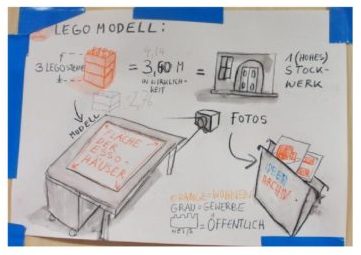
Ununiformed documentation: sketches collected during the ideation workshop.
2. Case Study: Wagnis
Our second reference is the project WagnisART, a residential area designed together with its community members and rewarded with the deutscher städtebaupreis 2016 (German Prize for Urban Design, 2016)
- The Team
Wagnis, established in 2000, is a young residential cooperative. Wagnis members are renters of their own properties. Each member still needs to pay a certain rent for their residence. But relative to market prices, this rent is much lower. Its funding model is that the Munich city government subsidizes social housing with funds.
- The structure
WAGNIS has three official bodies: the General Meeting, the Board, and the Supervisory Board. The majority of our organization is comprised of the many informal groups within the housing projects. However, all overarching decisions are made by the Board, the Supervisory Board, and the General Meeting.
Methodology
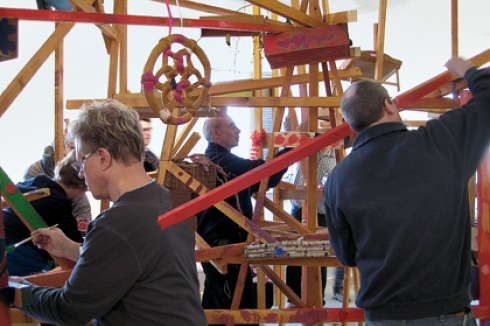
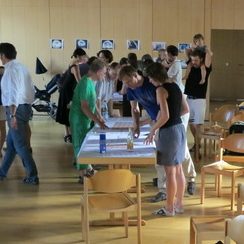
Wagnis runs the project with membership and an inclusive participatory design process. In their project development, the role of the architect becomes a kind of game master. , everyone can design, but he cannot design his own apartment. Everyone pays more attention to the common spatial quality. For example, how do people enter residential groups, how to get there from public spaces, and finally enter their own apartments?
Aspects for community:
- Concepts of social and ecological sustainability
- Collaborative, inclusive, and intergenerational living
- Neighborhood networking and initiatives
Material for expression:
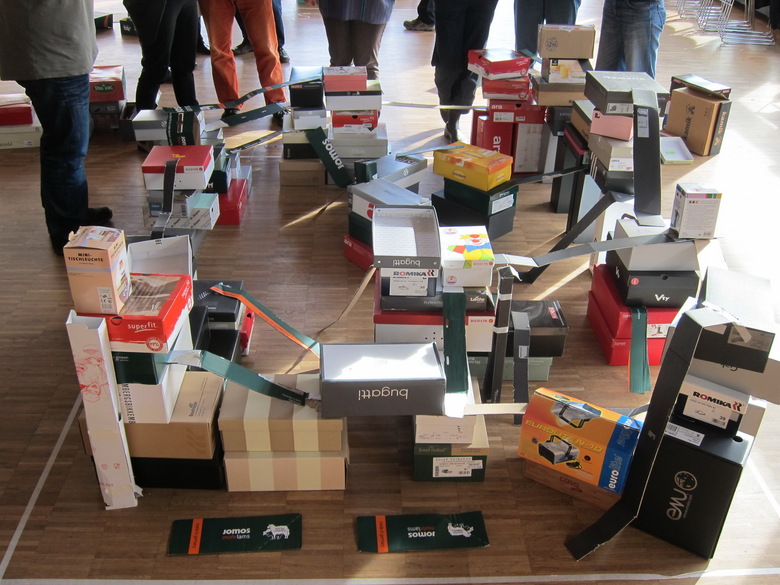
150 or 200 foldable and removable cardboard boxes for the workshop brought by architects, allowing people to create what they want to do according to the rules of complete freedom, creating separate, spatialized work.
Challenges
- Documentation and Analysis:
Shoebox models are hard to preserve and analyze. Also, if there is any modification after demolition in further design steps, users need to rebuild the model.
- Navigating Conflicting Interests:
Different stakeholders may have conflicting interests or priorities, which may require careful negotiation and problem-solving.
Our improvement & storyboard
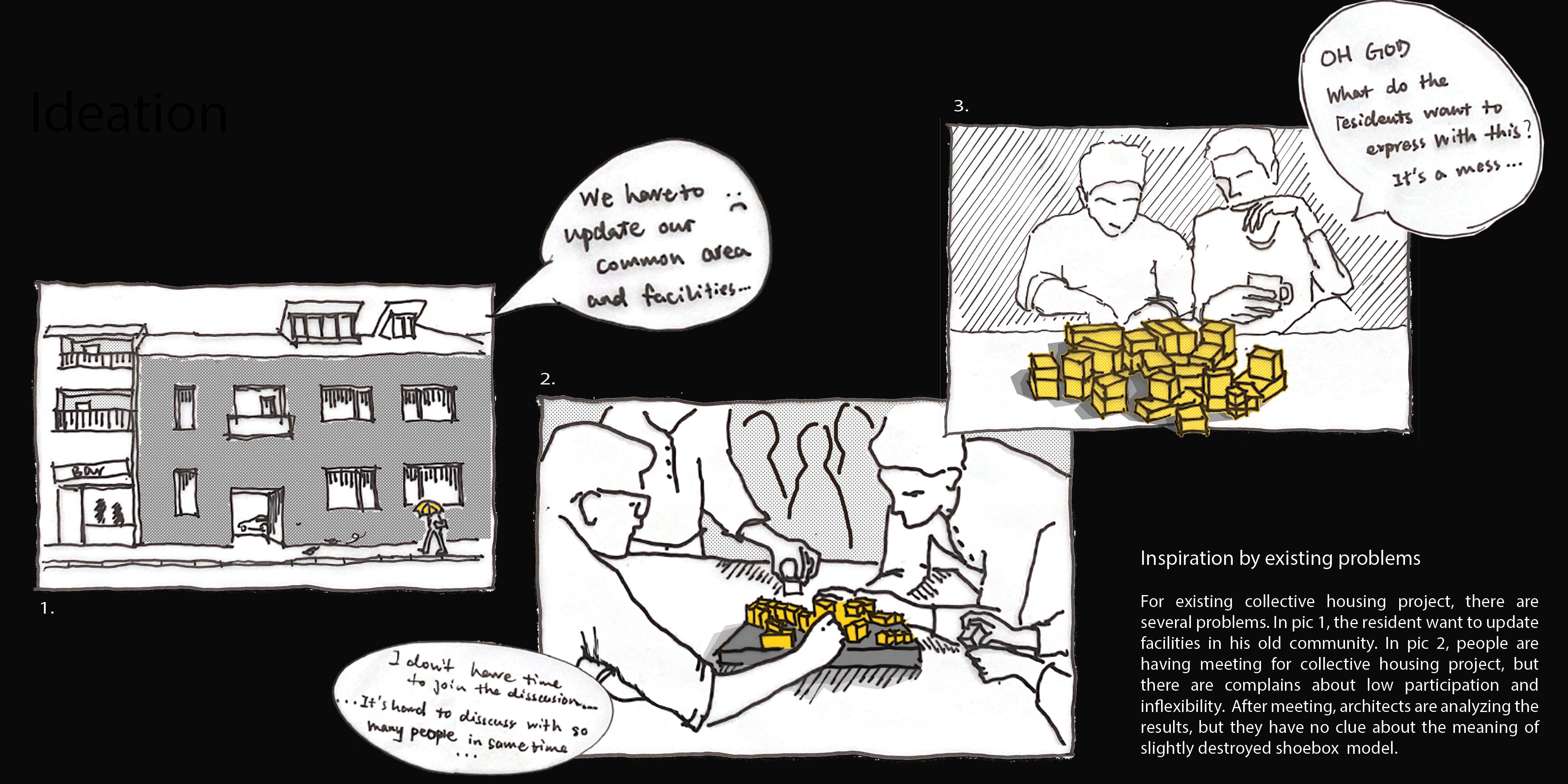
- Easy preservable and modifiable model system
- Less time consume
- Unconstrained by location
- Balanced participant influence

Sketches
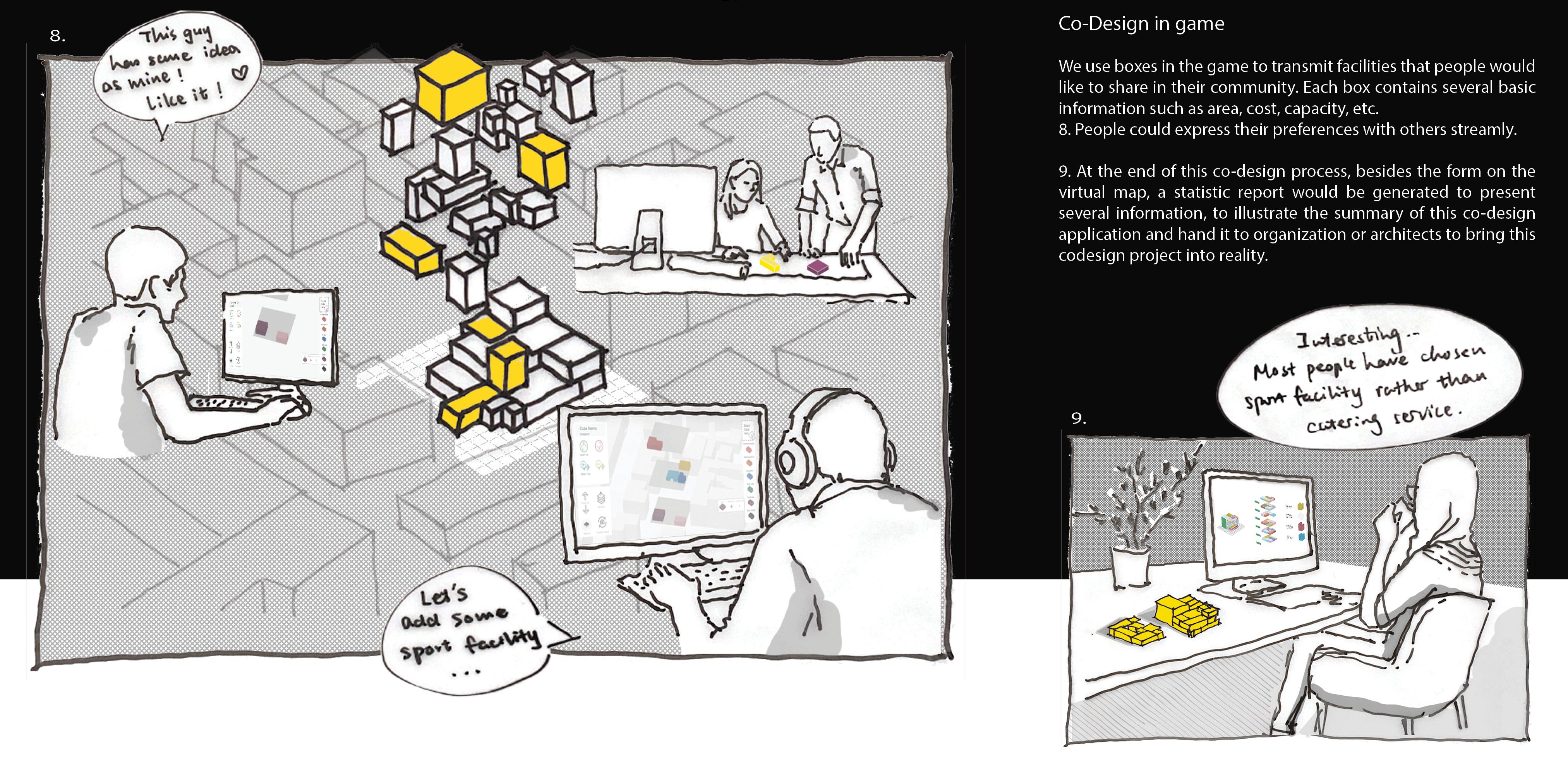
Our application is trying to be more intuitive and easier for understanding and operating. So we keep the game process and interface simple and clean as much as possible.
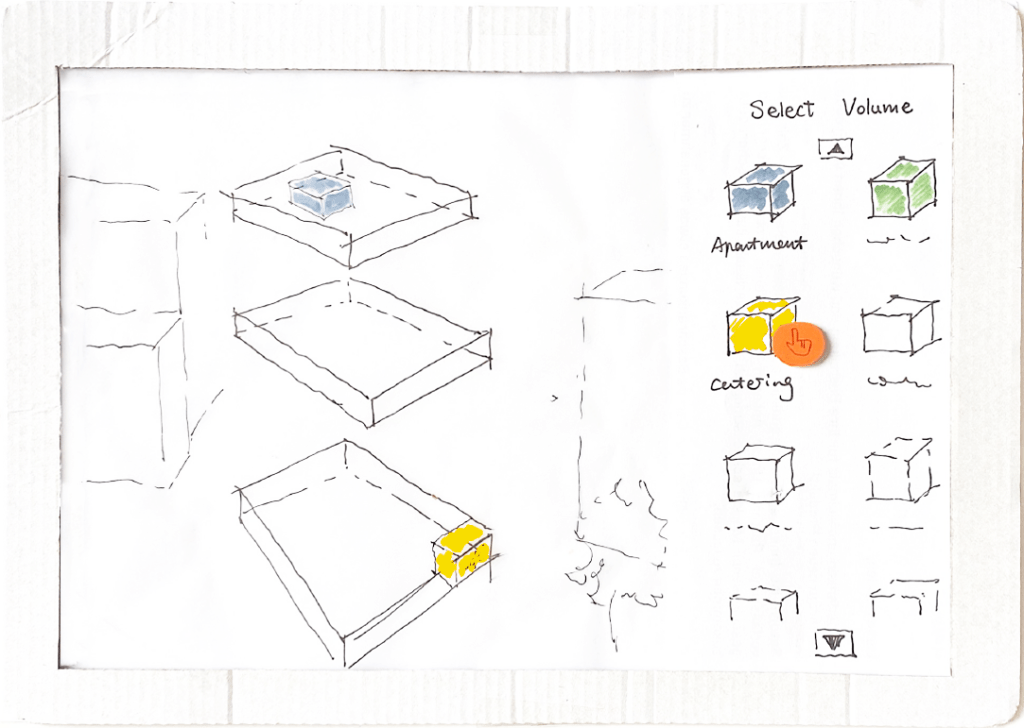
1. Select a facility box from the category “Catering service”.
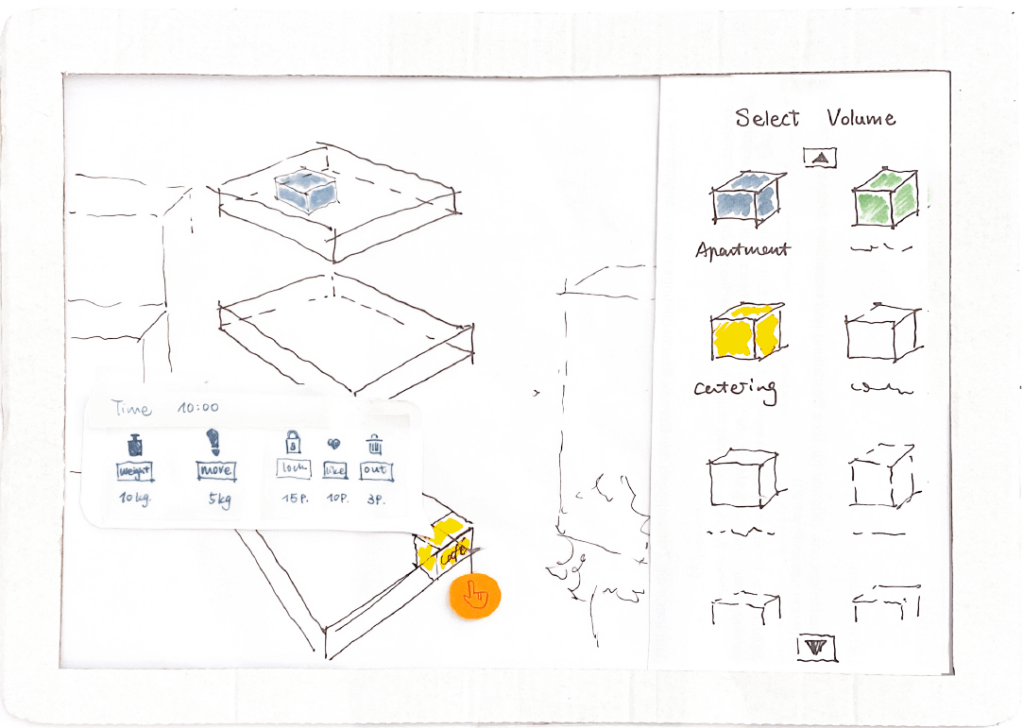
2. Click on the box, operators will pop up: “like”, “dislike”, “add” and “lose weight”.
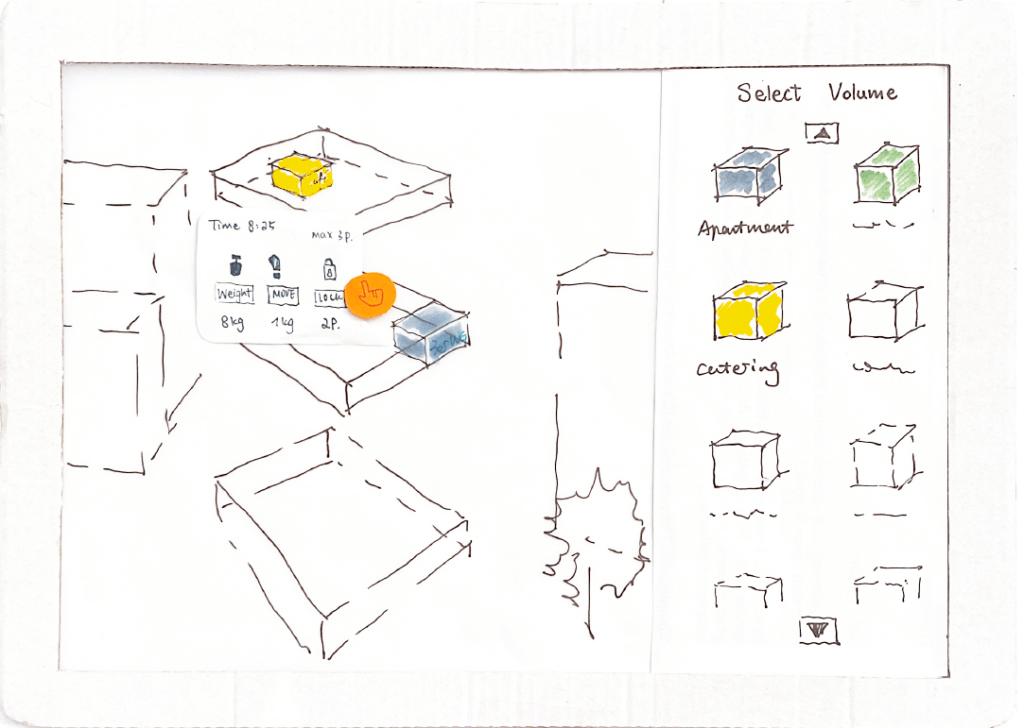
3. Operating. For example with location, people could add weight to this box to dominate its location.
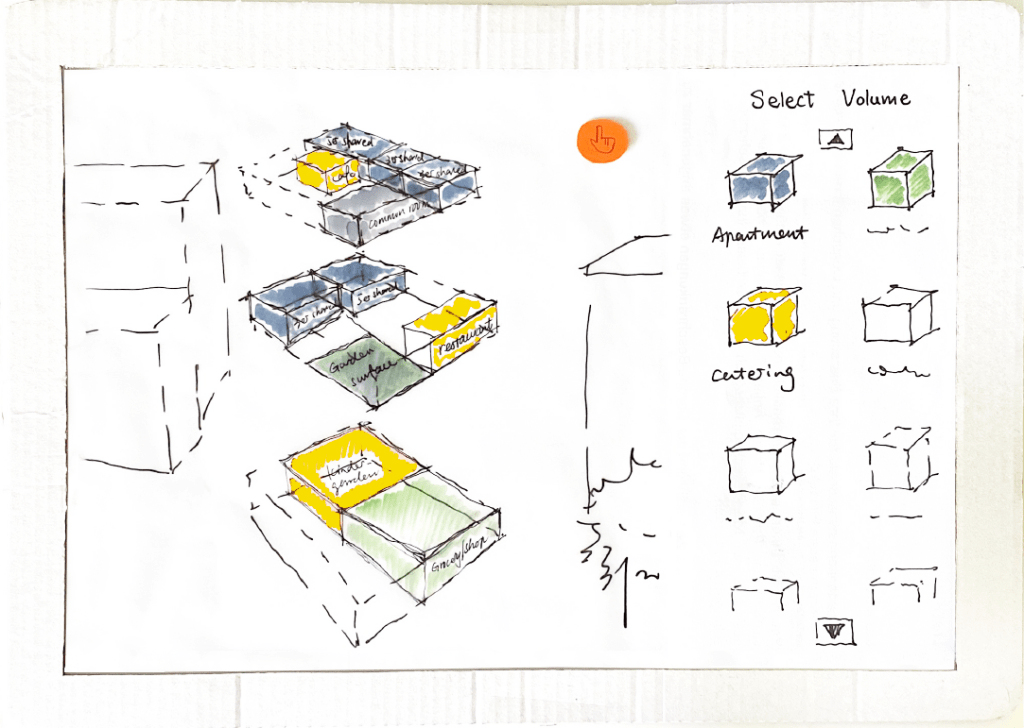
4. Finish discussion with a result of disired facilities in satisfied places.
Prototype Co-Design community step-by-step
Reflections and next step
We have some functions to be implemented that will make the whole process more complete. Firstly, this game is a website game for multiplayer, so it needs to add a controlling component, for example network manager in unity.
Also we would like to add a feedback function and a rotation function to adjust the digital model. If users want a larger space or have a common extra need for a certain facility, the feedback system could inform architects to improve the design.
Lastly, we want to develop the step two for residents to discuss their sharing of apartment space. Each user has a unit to merge or stack with others in the same unit. If enough people have chosen and stacked the same unit together, the merged volume would be established as a space and then joint with other space.
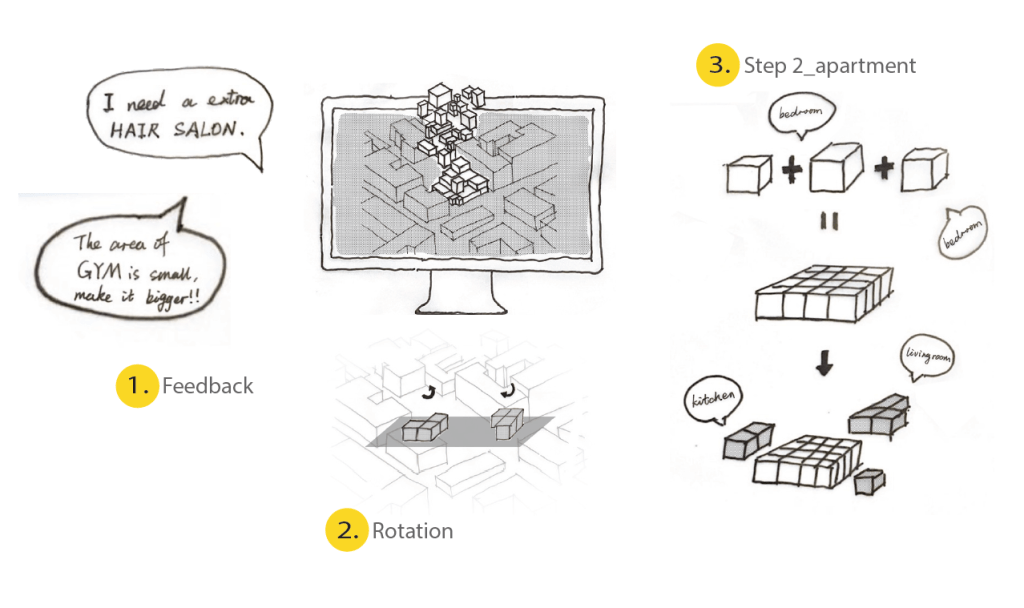
After residents submit feedback, they could engage in a collaborative discussion or voting process to collectively refine the architectural diagram. This iterative feedback loop allows for continuous improvement and ensures that the final design reflects the preferences and needs of the community.
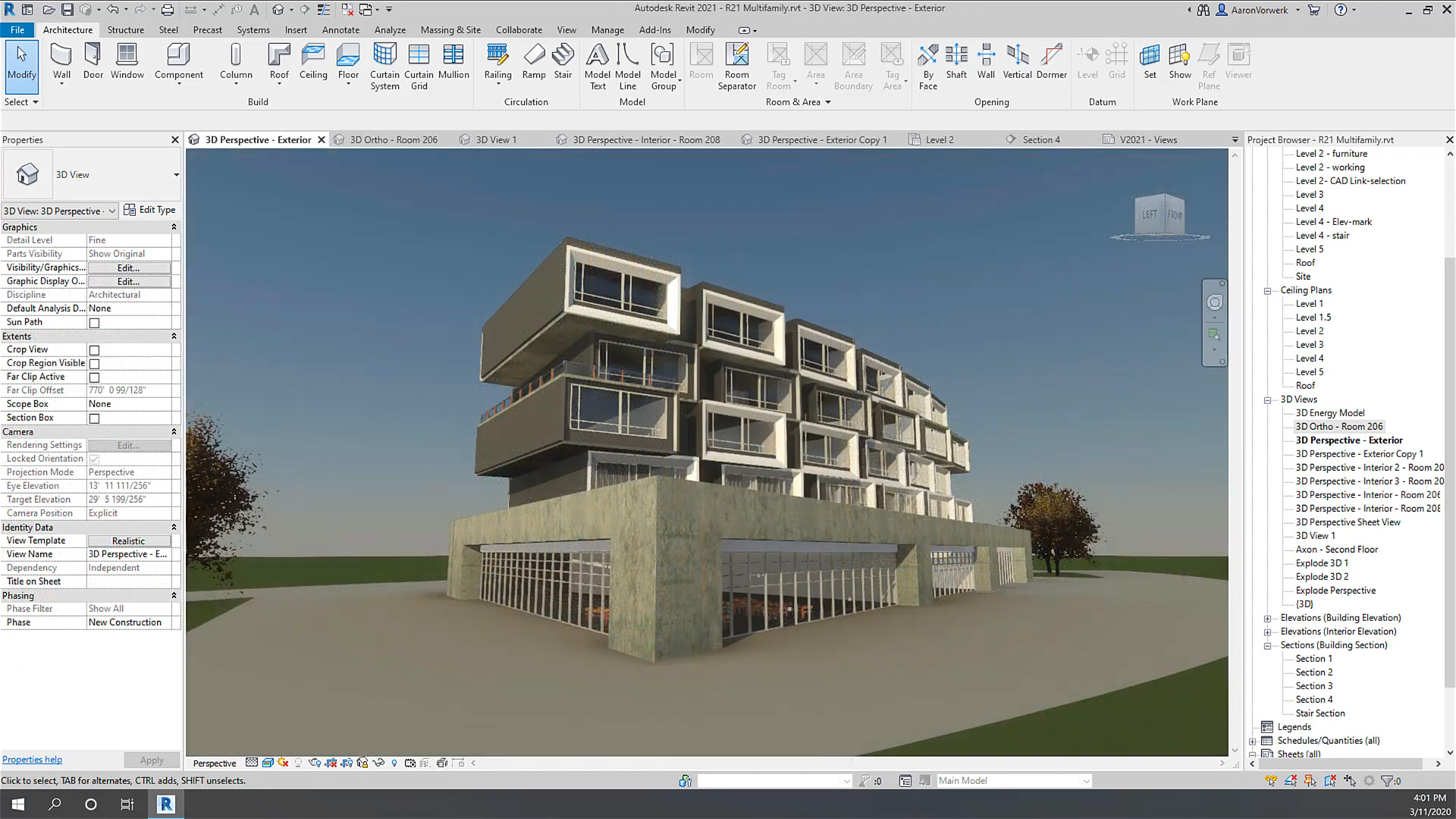
This diagram will be passed on to the architect for processing in profissional modeling software such as BIM system in order to communicate in the construction stage.
 CongLiu Design